Launch offer — valid today only

📄 Digital book in PDF · read it on your phone or print it

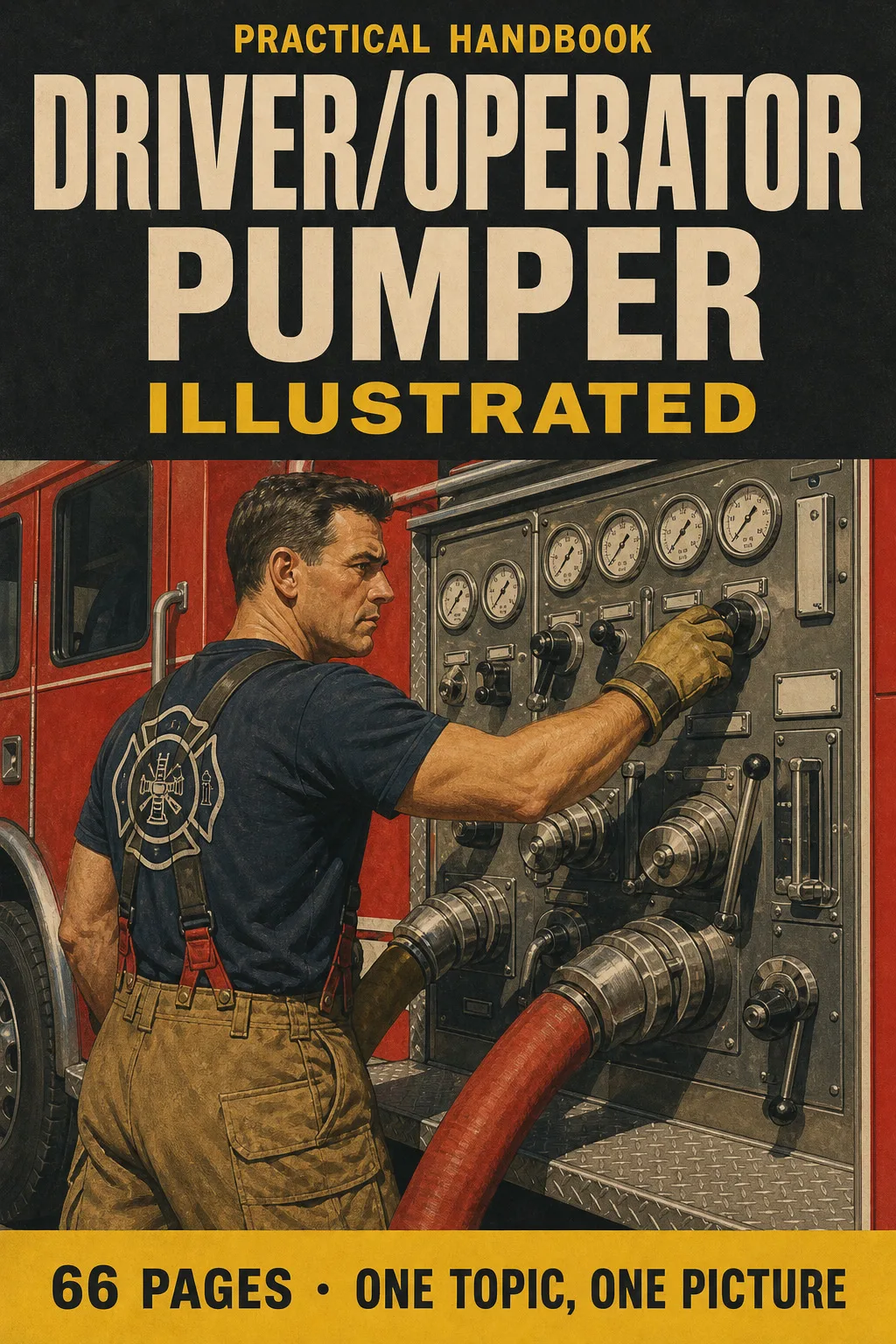
Driver/Operator Pumper in Drawings: Read the Pump Panel and Work PDP in 5 Steps One Drawn Topic per Page

The centrifugal pump, the pump panel, hydrants, drafting, relay pumping, friction loss, standpipes and the daily check. Every topic gets its own page: the drawing first, then what you need to remember. 66 illustrated pages.

START STUDYING THIS WAY

🔒 Secure checkout · PDF by email · 30-day guarantee

Every topic, its own pageEvery pump part, gauge and formula drawn, with the explanation right beside it
66 illustrated pages66 illustrated pages: 8 parts, 62 topics
Up-to-date sourcesNFPA 1010 (2024, formerly NFPA 1002), NFPA 1911 and NFPA 291
PDF by emailFormat

Look Inside the Book

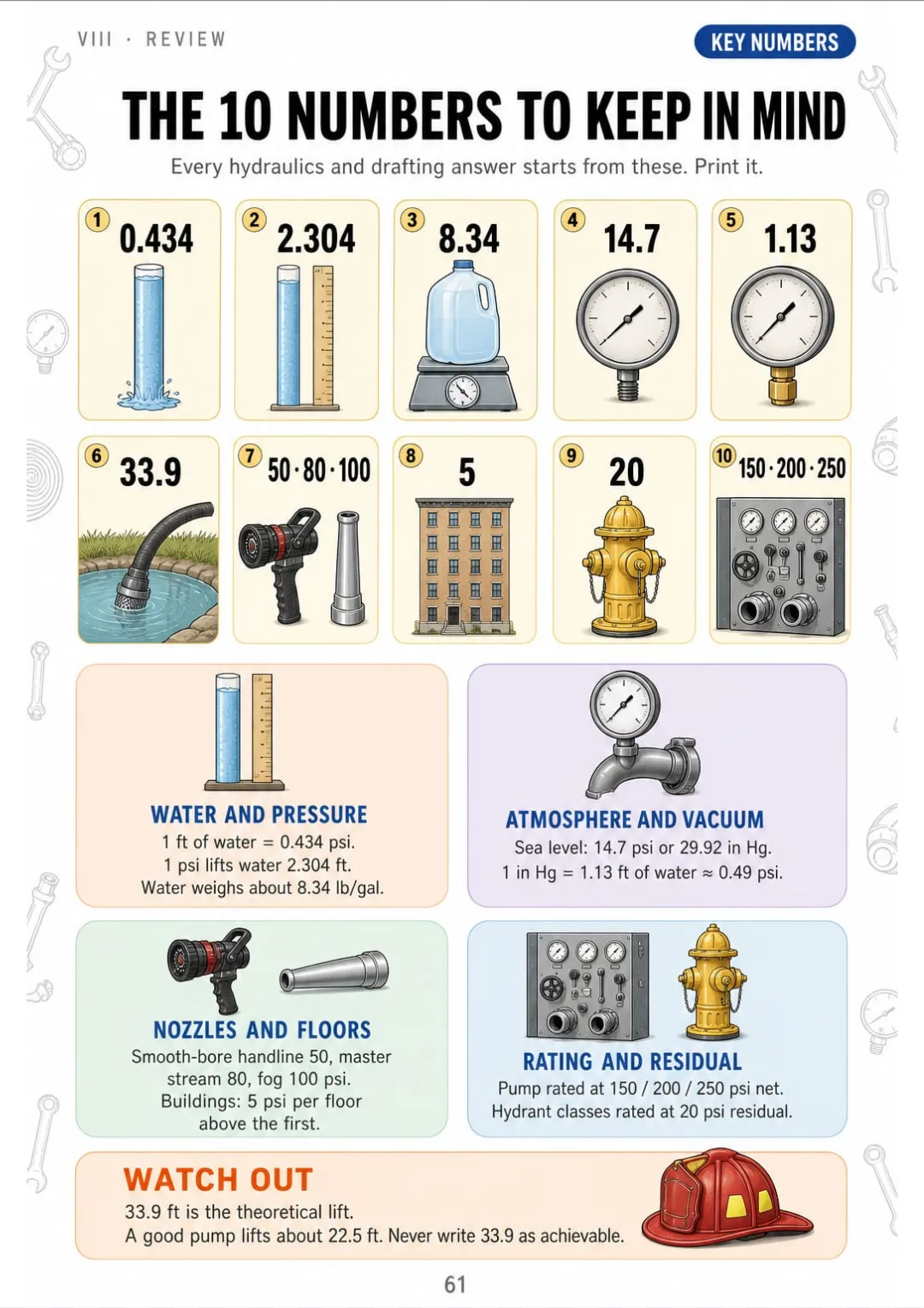
Every page has one big drawing and a box with the numbers and steps you need to know:

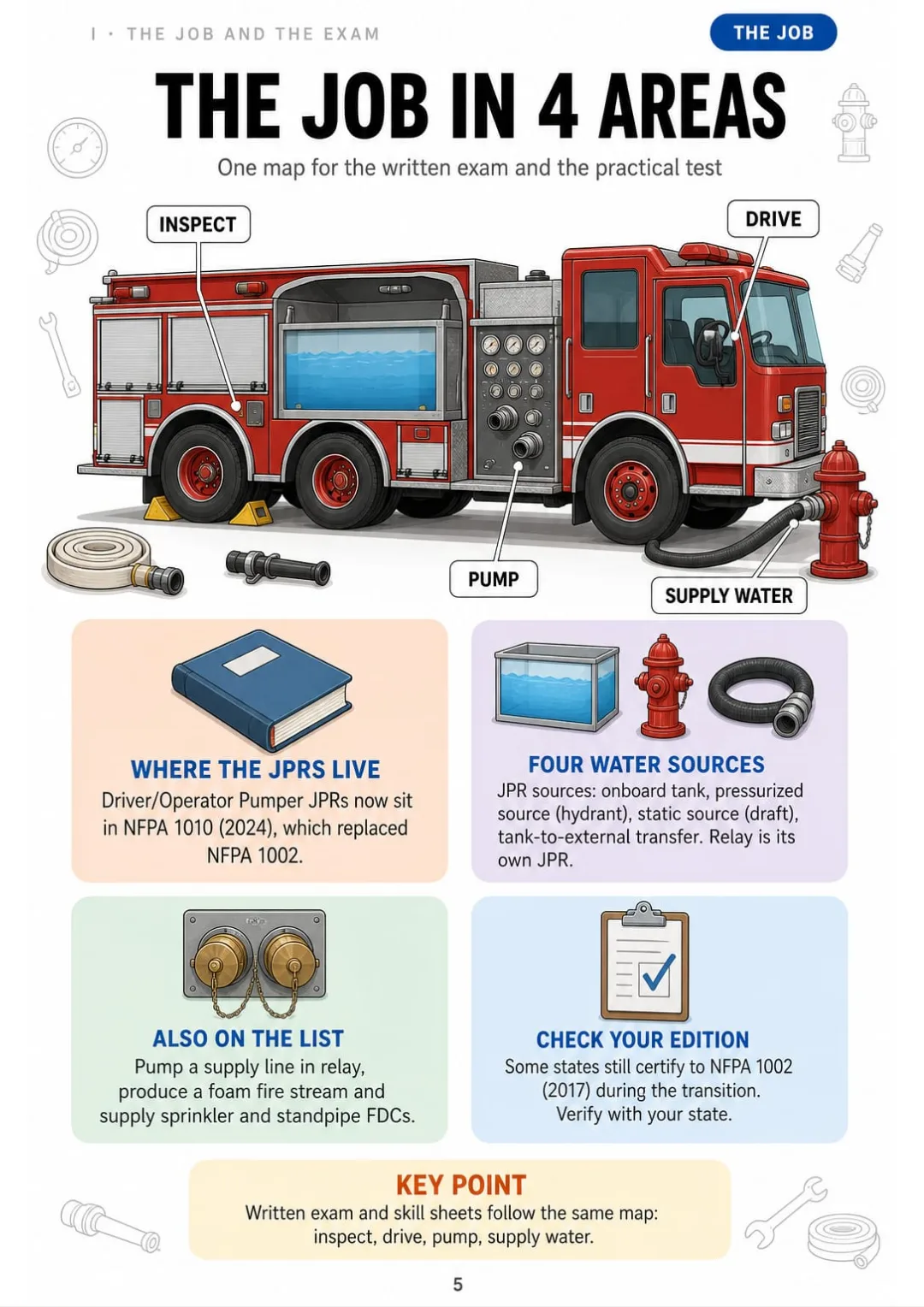
NFPA 1010 (2024): inspect, drive, pump and supply water from tank, hydrant, draft or relay.
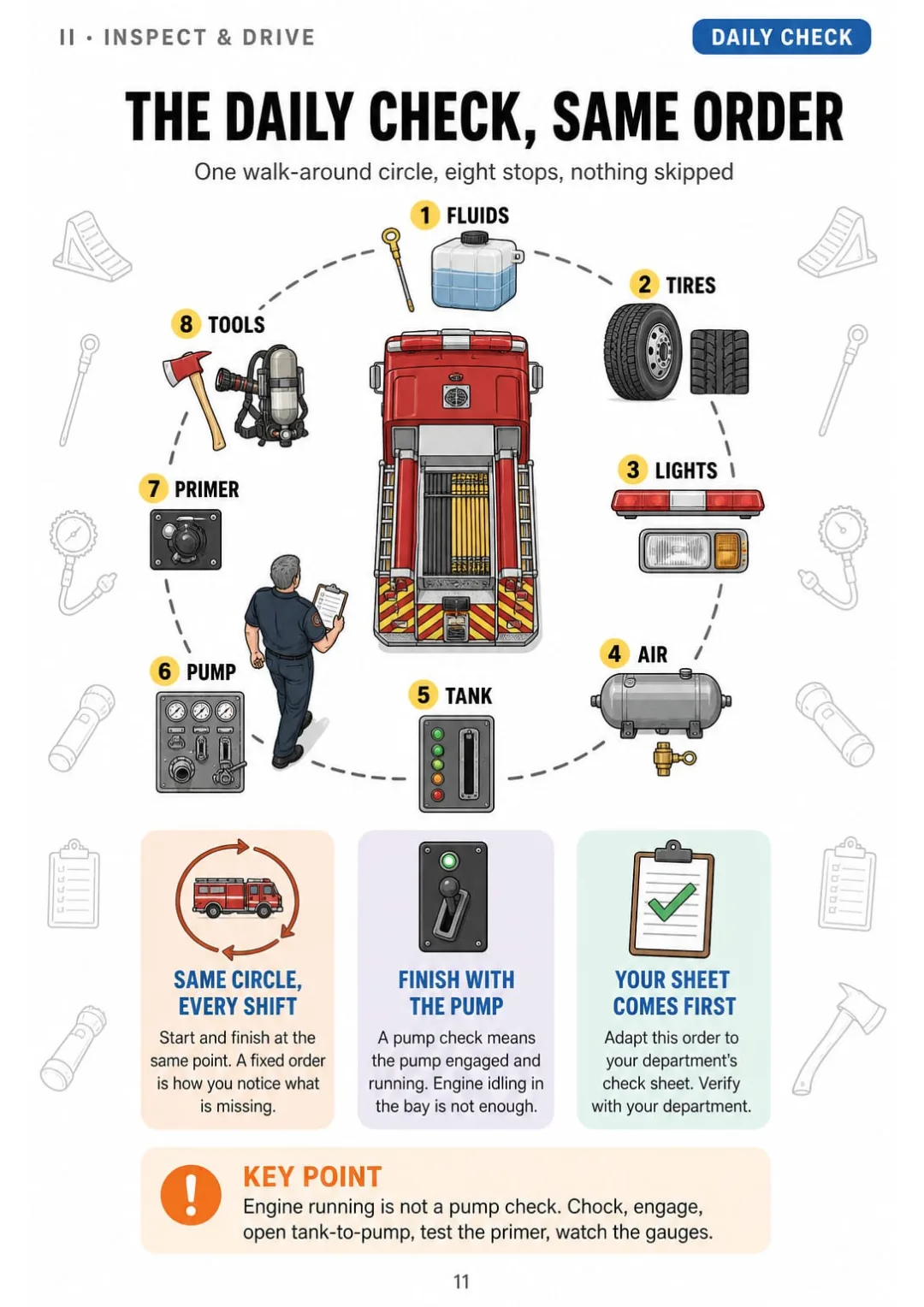
Fluids, tires, lights, air, tank, pump, primer, tools: the walk-around drawn as one circle.
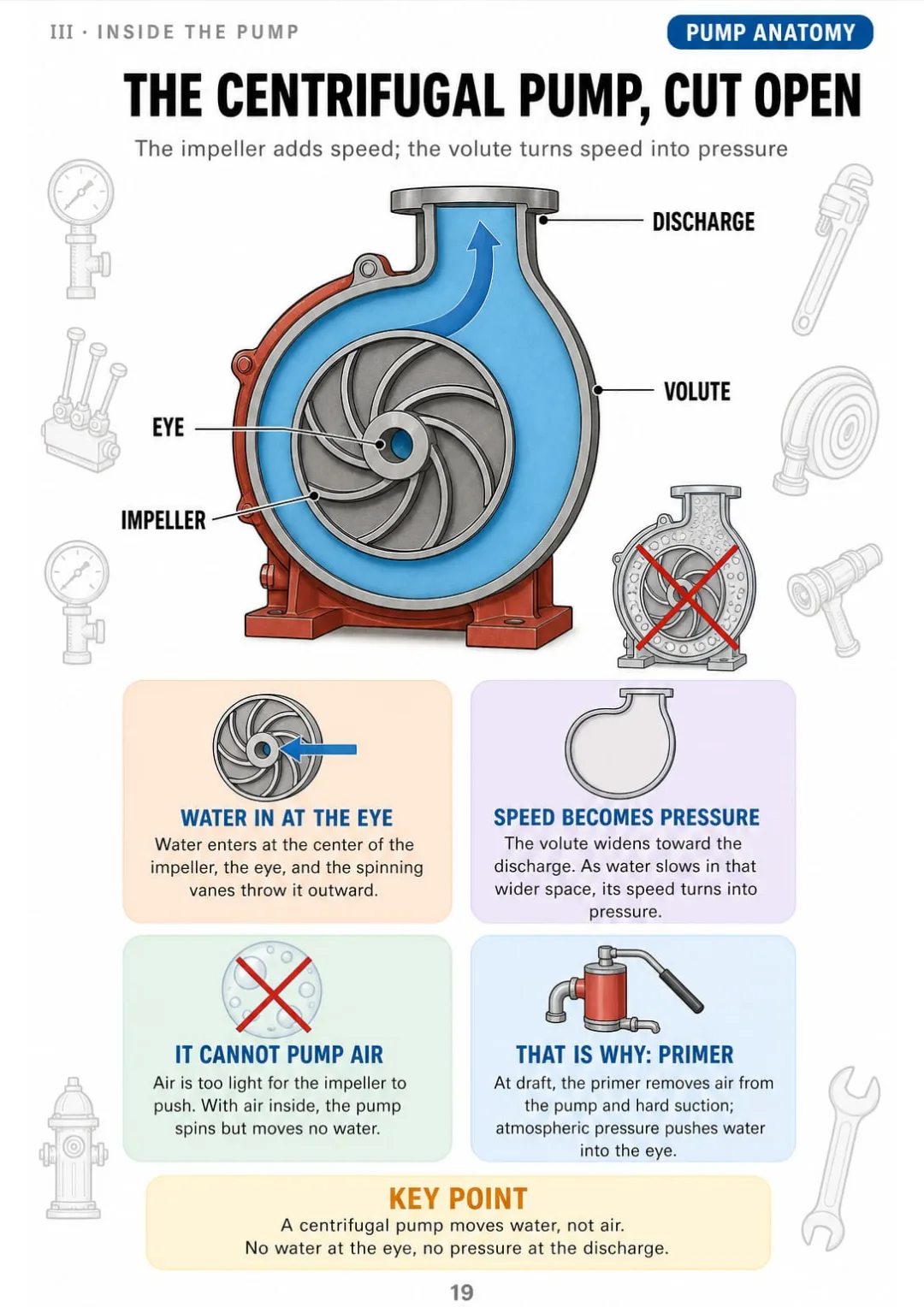
Eye, impeller, vanes, volute and discharge, drawn and labeled in one cutaway
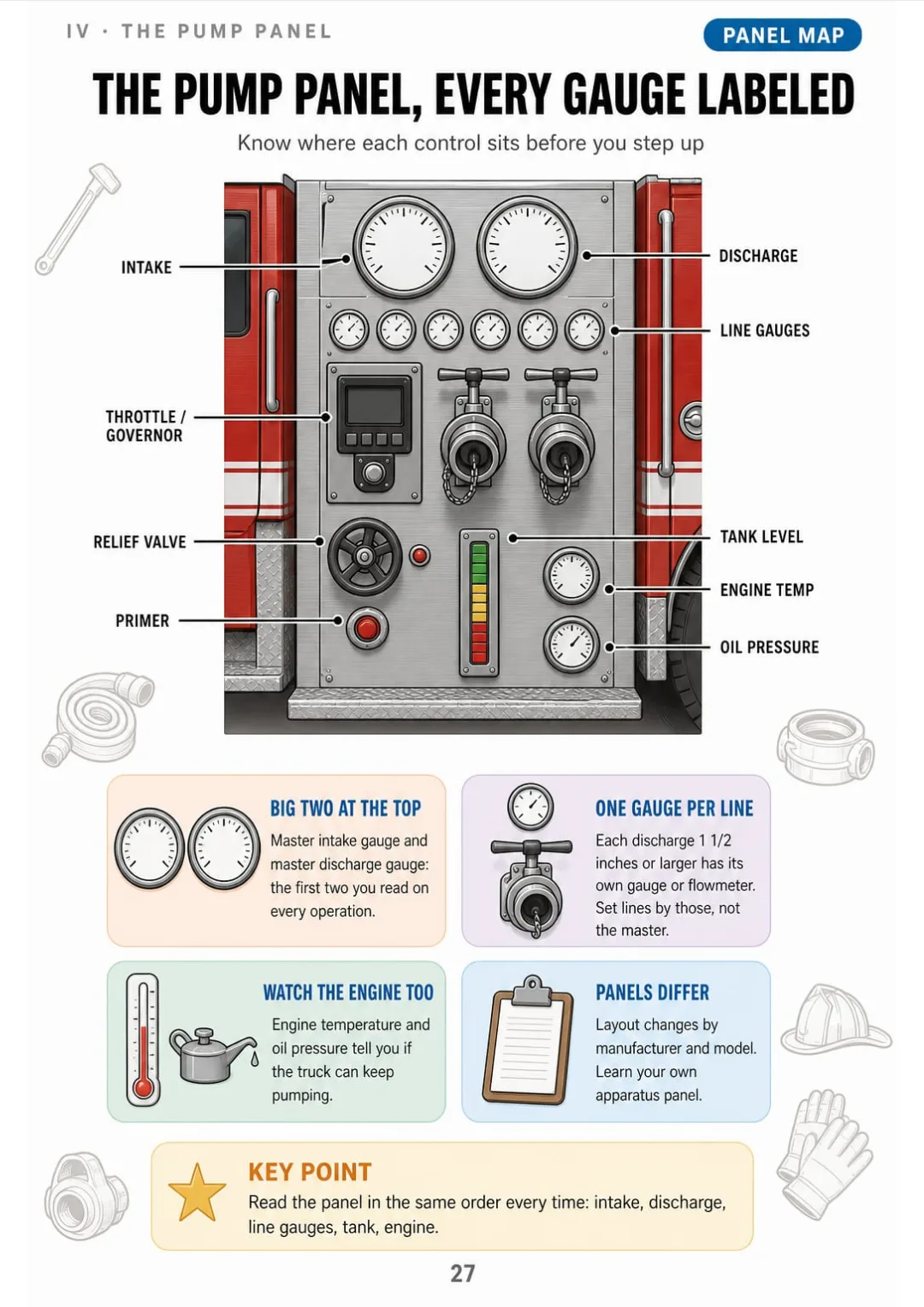
The full pump panel drawn with 9 labeled parts, from master intake to oil pressure.
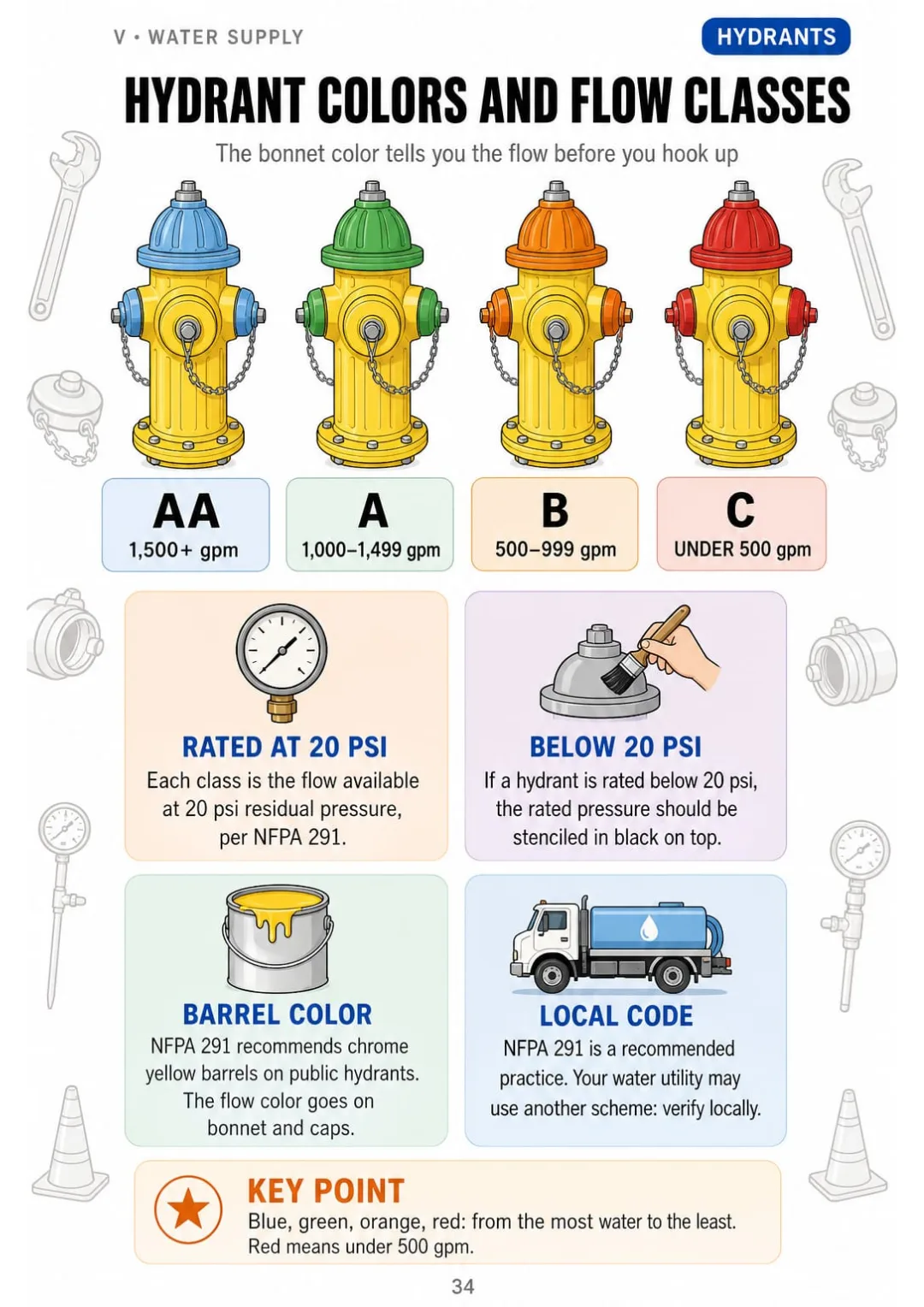
NFPA 291: light blue AA 1,500+ gpm, green A, orange B, red C under 500 gpm.
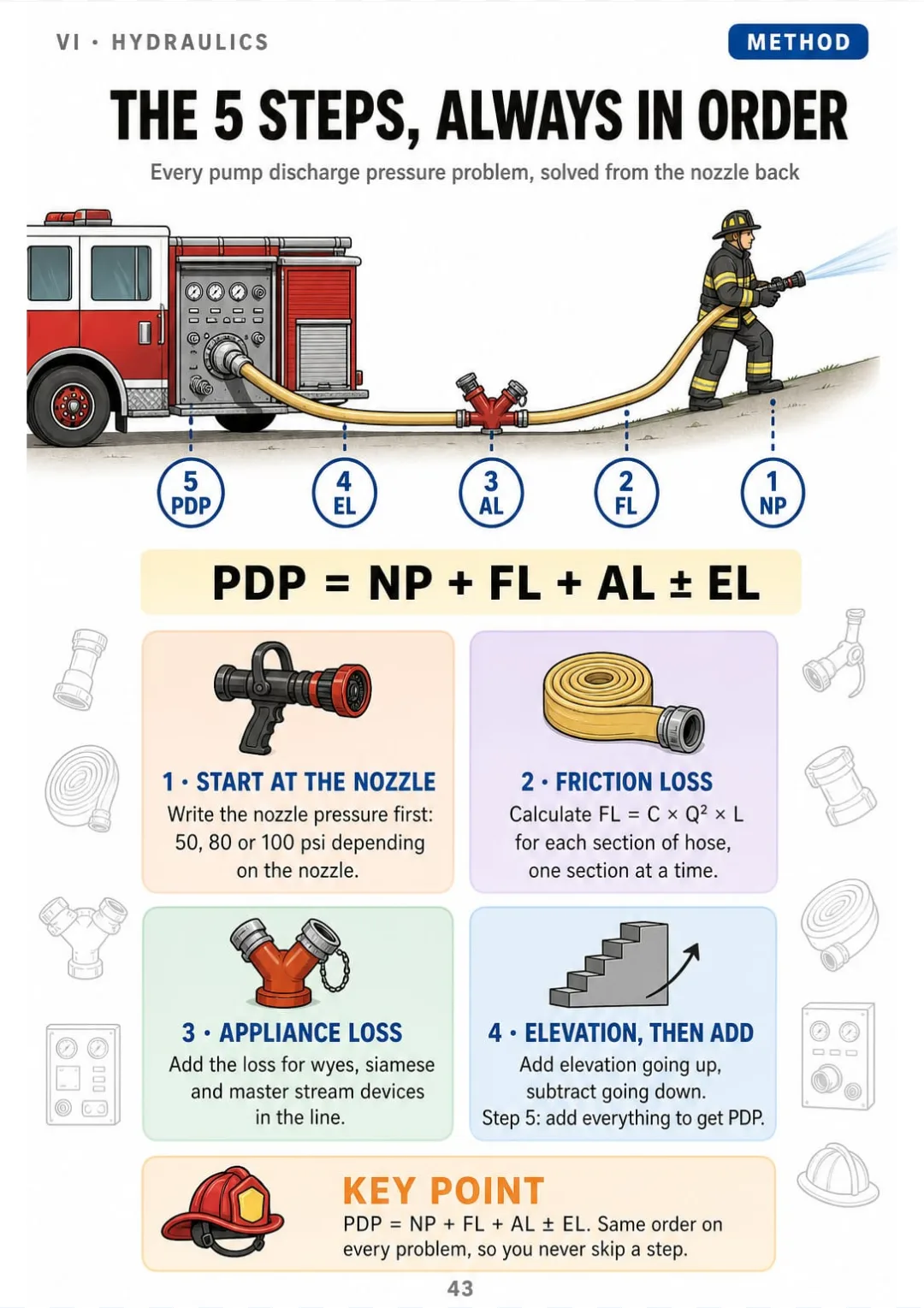
PDP = NP + FL + AL ± EL, drawn as a line from pump to nozzle
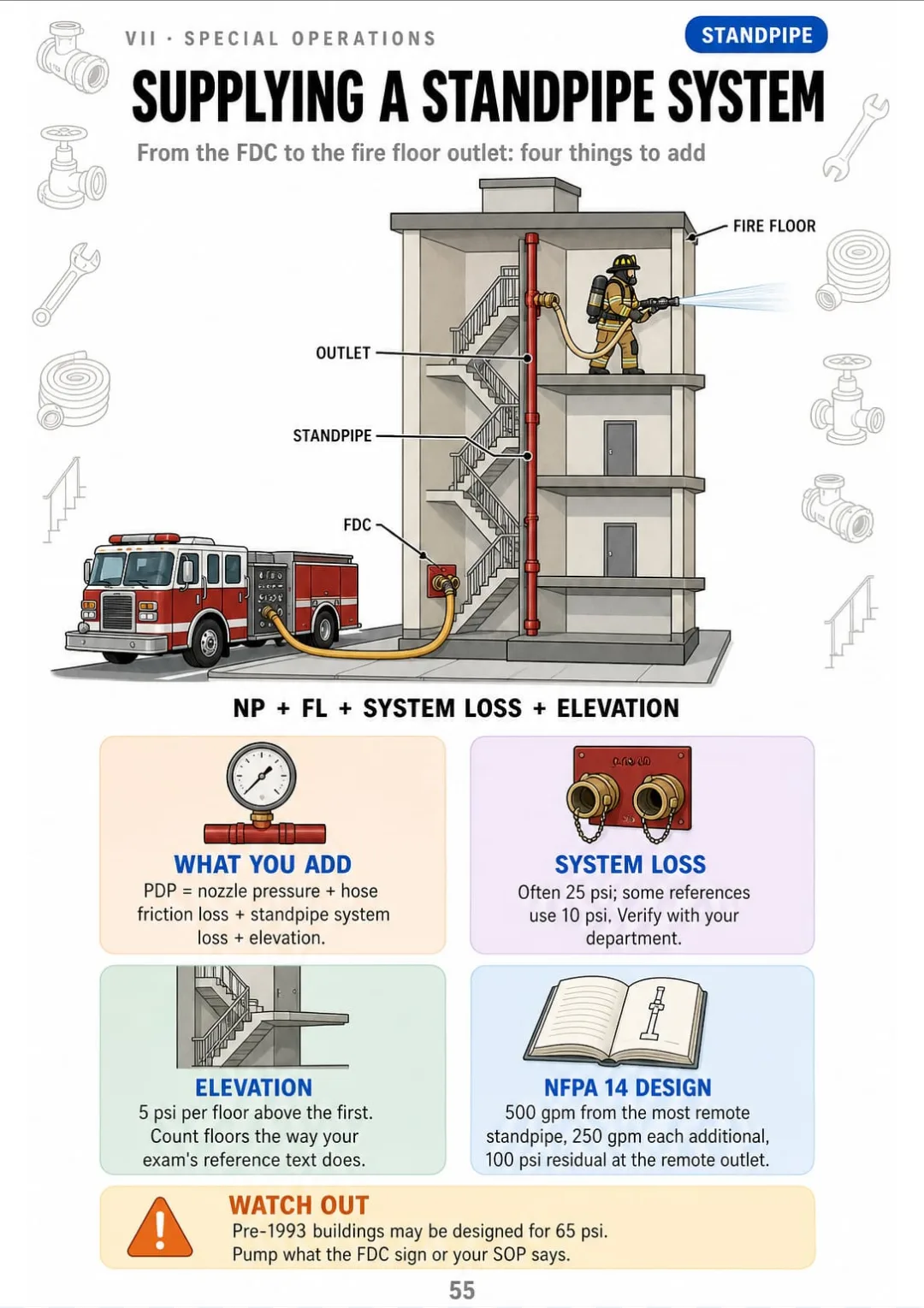
Standpipe PDP = NP + FL + system loss (often 25 psi) + 5 psi per floor
0.434 psi/ft, 8.34 lb/gal, 14.7 psi, 50/80/100 psi: the ten numbers on one page

Swipe to see more →

These are real pages from the book. The table of contents is the full one: 8 parts and 62 topics.

The Problem Isn't You. It's How It Was Explained to You.

Drill night. The captain says: “Two 1¾ lines off a wye, 200 feet each, 150 gpm. What's your PDP?” You did this problem last week. Tonight the coefficient won't come to you.

The manual gives you FL = CQ²L, a coefficients table, nozzle pressures, appliance loss and elevation, each in a different section. Five pieces in five places, and nothing tells you which comes first.

Eye, impeller, vanes, volute and discharge, drawn and labeled in one cutaway

In this book PDP sits on one page, drawn on the hose from the nozzle back to the pump: NP, FL, AL, elevation, then PDP. Same 5 steps, same order, every problem.

The rest works the same way: the pump panel with every gauge labeled, hydrant colors and flow classes, setting up a draft, the 5-step PDP method, supplying a standpipe. Each one gets its own page.

Once you've seen how the pump works, you know why the intake gauge drops or the discharge won't build. You get it, and you run it, without going back to the manual.

COMPARE FOR YOURSELF

The Same Topic, Two Ways to Study It

THIS
  • The manual: line after line of text
  • Inspection steps explained only in words
  • You walk into the exam still unsure
At the start of each shift, the driver/operator inspects the apparatus following the manufacturer's recommendations and department policy. The inspection typically covers engine oil, coolant, transmission and power steering fluid levels; tire condition, inflation and lug nuts; warning and running lights; air pressure build-up; water tank level; pump and primer operation; and the tool and equipment inventory. Any deficiency is documented and reported through the chain of command.
FOR THIS
  • The walk-around in one drawing
  • Fluids, tires, air, tank, pump and primer in one box
  • You see it and you get it
Fluids, tires, lights, air, tank, pump, primer, tools: the walk-around drawn as one circle.
CONTENTS

Take a Look at the 8 Parts and 62 Topics

The job and the exam, inspecting and driving the apparatus, inside the pump, the pump panel, water supply, the 5-step hydraulics method, special operations, and a review with the most common mistakes: 66 pages, all illustrated.

IThe Job, the Exam and the Numbers · pp. 5-10
  1. What a Driver/Operator Pumper Is Expected to Do
  2. How the Written Exam Asks the Questions
  3. How to Use This Book: One Page, One Idea
  4. The Units You Will Use: psi, gpm, Feet and Inches of Mercury
  5. Water Is Heavy: Weight, Pressure and Head
  6. Static, Residual, Flow and Normal Pressure
IIInspecting and Driving the Apparatus · pp. 11-18
  1. The Daily Check in the Same Order Every Time
  2. The Air Brake Check With Its Numbers
  3. Stopping Distance: Perception, Reaction and Braking
  4. Weight Transfer, Baffles and Rollovers
  5. Intersections and Due Regard
  6. Backing With a Spotter
  7. The Driving Course: Alley Dock, Serpentine, Turnaround, Diminishing Clearance
  8. Positioning the Engine at the Scene
IIIInside the Pump · pp. 19-26
  1. The Centrifugal Pump in Cross-Section
  2. Single-Stage and Two-Stage Pumps
  3. Pressure (Series) or Volume (Parallel)
  4. The Pump Rating: 150, 200 and 250 psi
  5. Engaging the Pump in Order
  6. The Primer and the Booster Tank
  7. Cavitation: When the Pump Asks for More Than It Gets
  8. Overheating and Water Hammer
IVThe Pump Panel · pp. 27-33
  1. The Pump Panel With Every Gauge Labeled
  2. Master Intake Gauge vs. Master Discharge Gauge
  3. The Pressure Relief Valve
  4. The Pressure Governor: Controlling Pressure or rpm
  5. The Intake Relief Valve
  6. Going From Tank Water to Hydrant Water
  7. Charging and Shutting Down Lines
VWater Supply · pp. 34-42
  1. Hydrant Colors and Flow Classes
  2. Dry-Barrel and Wet-Barrel Hydrants
  3. How Much More Water This Hydrant Has
  4. Forward Lay and Reverse Lay
  5. Drafting: Why Water Goes Up the Suction Hose
  6. Setting Up a Draft Step by Step
  7. Relay Pumping
  8. Water Shuttle: Tenders, Portable Tanks and Jet Siphons
  9. Supplying a Sprinkler or Standpipe FDC
VIHydraulics: The 5-Step PDP Method · pp. 43-54
  1. The 5 Steps, Always in the Same Order
  2. Step 1: Nozzle Pressure
  3. Smooth Bore Flow: GPM = 29.7 × d² × √NP
  4. Step 2: Friction Loss, FL = C × Q² × L
  5. The Hose Coefficients Table
  6. Worked Example: One 1 3/4-inch Attack Line
  7. Step 3: Appliance Loss
  8. Step 4: Elevation, Up and Down
  9. Wyed Lines: Equal and Unequal
  10. Siamesed Lines and Supply Lines in Parallel
  11. Net Pump Discharge Pressure From a Hydrant and From Draft
  12. Nozzle Reaction: How Hard the Line Pushes Back
VIISpecial Operations · pp. 55-60
  1. Supplying a Standpipe System
  2. Worked Example: Fire on the 8th Floor
  3. Master Streams: Deck Gun and Portable Monitor
  4. Foam: Percentage, Eductor and Proportioning
  5. Wildland and Pump-and-Roll
  6. Fire Pump Service Test
VIIIReview and Common Mistakes · pp. 61-66
  1. The 10 Numbers to Keep in Mind
  2. The Most Common PDP Mistakes
  3. Pump Problems: Sign, Cause and What to Do
  4. The Panel Sequence From Arrival to Shutdown
  5. 5 PDP Problems to Solve Before the Exam
  6. The Night Before the Exam: The Final Checklist

One Page, One Topic, All Clear

Think of it this way:

You're on the panel with 200 feet of 1¾-inch going up to the third floor, and the officer wants water now. You need the discharge pressure, and you need it in order.

In the book you open the page with the 5 steps and see one line drawn from the pump to the nozzle: nozzle pressure, friction loss, appliance loss, elevation, then PDP. Each step sits on the hose right where it happens.

NFPA 291: light blue AA 1,500+ gpm, green A, orange B, red C under 500 gpm.

Same with the centrifugal pump cut open, the panel with every gauge labeled, setting up a draft, hydrant colors and the fire on the 8th floor: each one on its own page.

Driver/Operator Pumper Illustrated is 8 parts and 62 topics, all drawn, and it ends with the 10 numbers to keep in mind, the most common PDP mistakes and 5 problems to solve before the exam.

What you see drawn, you don't have to memorize.

What's Inside Driver/Operator Pumper Illustrated:

Ipp. 5-10

The Job, the Exam and the Numbers

What a driver/operator pumper does, how the written exam asks its questions, the units (psi, gpm, feet, inches of mercury), water weight and head, and static, residual, flow and normal pressure.

IIpp. 11-18

Inspecting and Driving the Apparatus

The daily check in the same order, the air brake check with its numbers, stopping distance, weight transfer and rollovers, intersections and due regard, backing with a spotter, the driving course and positioning at the scene.

IIIpp. 19-26

Inside the Pump

So you know why the discharge won't build or the pump overheats: the centrifugal pump in cross-section, single- and two-stage pumps, pressure vs. volume, the 150/200/250 psi rating, engaging the pump, the primer and booster tank, cavitation, overheating and water hammer.

IVpp. 27-33

The Pump Panel

The pump panel with every gauge labeled, master intake vs. master discharge, the pressure relief valve, the pressure governor, the intake relief valve, going from tank to hydrant water, and charging and shutting down lines.

Vpp. 34-42

Water Supply

Hydrant colors and flow classes, dry- and wet-barrel hydrants, how much more water a hydrant has, forward and reverse lay, drafting step by step, relay pumping, water shuttles and supplying a sprinkler or standpipe FDC.

VIpp. 43-54

Hydraulics: The 5-Step PDP Method

So you work every PDP problem the same way: nozzle pressure, smooth bore flow, friction loss with the coefficients table, appliance loss and elevation, then wyed and siamesed lines, net PDP from hydrant and draft, and nozzle reaction.

VIIpp. 55-60

Special Operations

Supplying a standpipe, a worked fire on the 8th floor, deck gun and portable monitor, foam and eductors, wildland pump-and-roll and the fire pump service test.

VIIIpp. 61-66

Review and Common Mistakes

The 10 numbers to keep in mind, the most common PDP mistakes, pump problems by sign and cause, the panel sequence from arrival to shutdown, 5 PDP problems and the final checklist for the night before.

At the end of the book: Exam-style practice questions with explained answers, plus hydraulics quick cards and the most common mistakes.
Plus: 2 Free Books

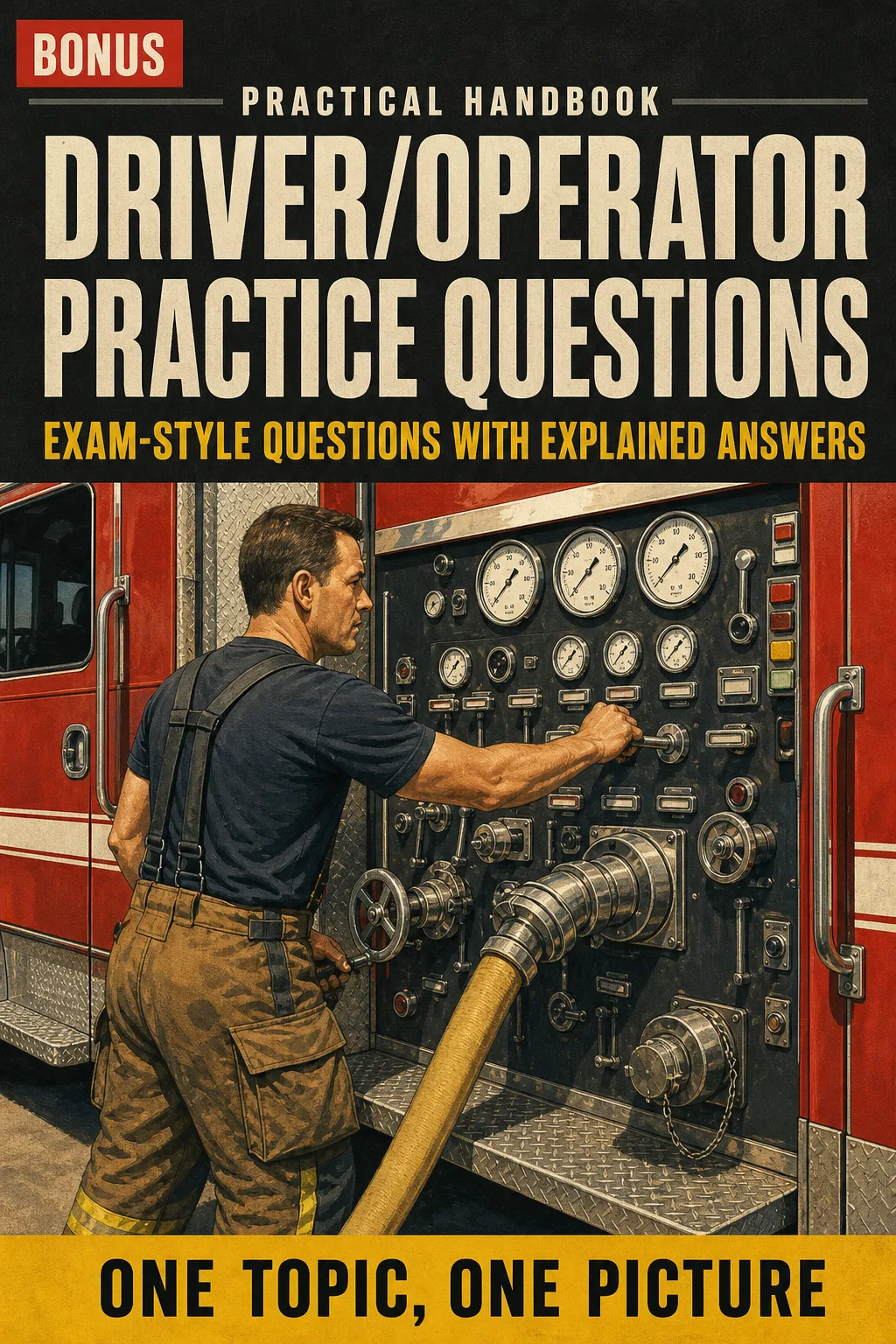
Driver/Operator Practice Questions: Exam-Style Questions With Explained Answers

BONUS 1: «Driver/Operator Practice Questions: Exam-Style Questions With Explained Answers»

Value on its own: US$ 17.90

Test yourself on pumps, hydraulics, water supply and driving, and see why each answer is right, so the real exam wording doesn't throw you.

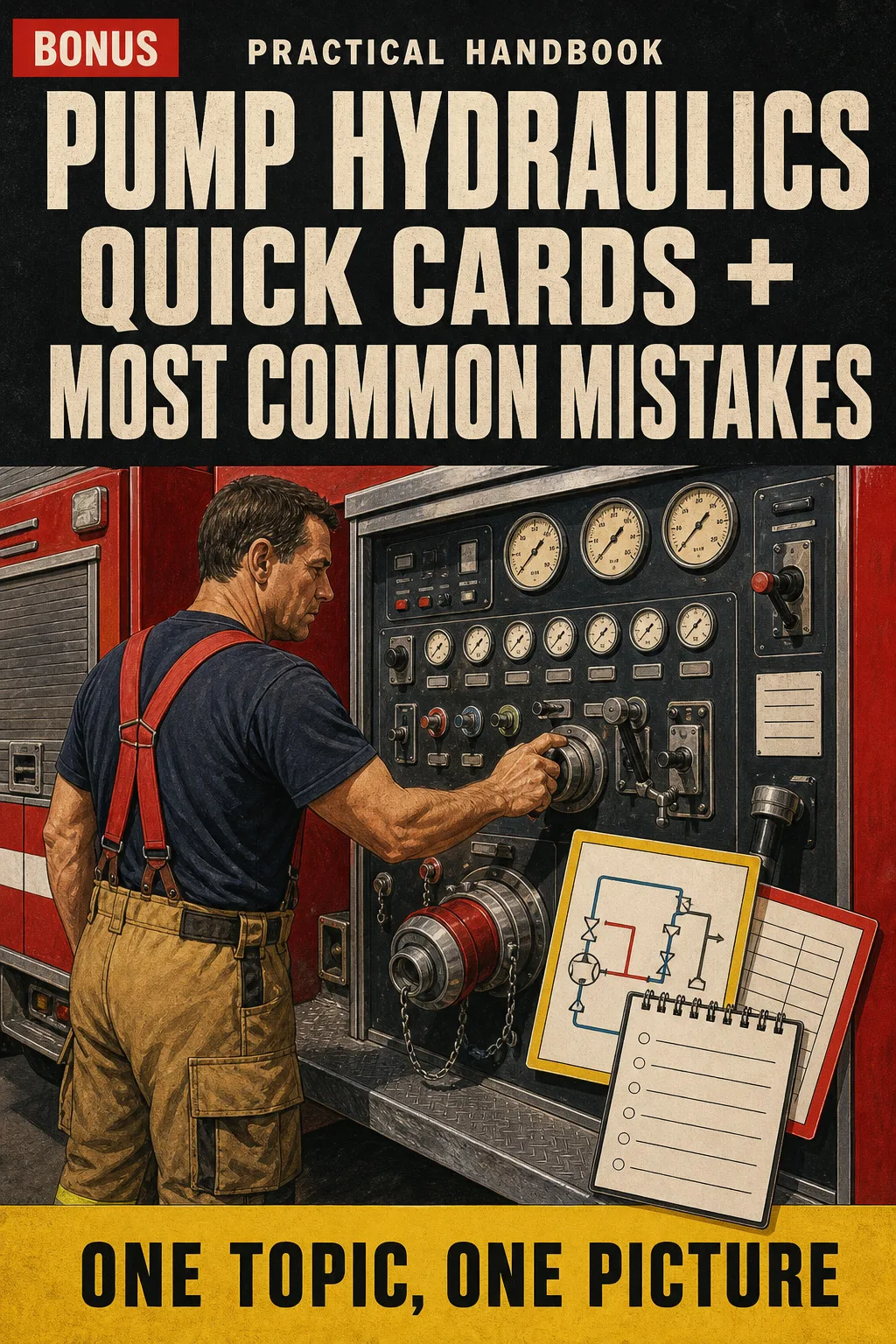
Pump Hydraulics Quick Cards + Most Common Mistakes

BONUS 2: «Pump Hydraulics Quick Cards + Most Common Mistakes»

Value on its own: US$ 14.90

Coefficients, nozzle pressures and the 5-step PDP order on printable cards, plus the mistakes made most often, like forgetting elevation or the appliance loss.

Driver/Operator Pumper Illustrated with 2 Free Books

  • Driver/Operator Pumper Illustrated: 66 illustrated pagesUS$ 63
  • BONUS 1: Driver/Operator Practice Questions: Exam-Style Questions With Explained AnswersUS$ 17.90
  • BONUS 2: Pump Hydraulics Quick Cards + Most Common MistakesUS$ 14.90
  • High-resolution PDF to printIncluded
Total value US$ 95.80
YOUR PRICE:
US$ 27
You save US$ 68.80
YES, I WANT DRIVER/OPERATOR PUMPER ILLUSTRATED FOR US$ 27

📄 This is a digital PDF book sent to your email: nothing is printed or shipped.

Secure purchaseEncrypted payment30-day guarantee

PDF by email: We email you Driver/Operator Pumper Illustrated as a PDF, together with the two free books. It's a single payment: no installments, no extra charges.

Who This Book Is For

You're studying for driver/operator

You're studying for driver/operator

You get the pump, the panel and the hydraulics one page at a time, drawn, so the manual finally makes sense between calls.

Your exam or promotion is coming up

Your exam or promotion is coming up

You review PDP in the same 5 steps every time and check the 10 numbers on one page, so a three-line problem doesn't throw you.

You already run the engine

You already run the engine

You put words and drawings to what you do by feel, for recertification or for teaching the new drivers.

Everything You Get Today

US$ 95.80US$ 27
YES, I WANT DRIVER/OPERATOR PUMPER ILLUSTRATED FOR US$ 27

📄 This is a digital PDF book sent to your email: nothing is printed or shipped.

30DAYS
GUARANTEE

30-Day Guarantee

Try Driver/Operator Pumper Illustrated for 30 days, bonus books included.

We refund everything if the file won't open, if the book isn't what you see here, if you were charged twice or if the email doesn't arrive. Just email us.

You pay once. No subscriptions.

Frequently Asked Questions

Is it for me if I've been driving the engine for years?

Yes. It's not a beginner book: it puts the pump, the panel and the hydraulics in one order, for the written exam, the engineer promotion or teaching the new drivers.

Where does the content come from?

It's checked against NFPA 1010 (2024 edition), the driver/operator and pumper chapters that used to be NFPA 1002, plus NFPA 1911, 1901, 291 and 14. Friction loss coefficients and nozzle pressures use the standard textbook values (for example, 15.5 for 1¾-inch hose; 50 psi for a smooth bore handline, 100 psi for a standard fog nozzle). Where your department's SOPs use a different number, the page says "verify with your department."

Is it official material?

No. It's an independent illustrated study book. It isn't published or approved by NFPA, IFSTA or any department, and it doesn't give a certificate or CE hours. It uses the standard formulas found in the IFSTA and Jones & Bartlett pumping manuals (like FL = CQ²L), so it works alongside whichever one your department uses, whatever your state's question bank.

Does it replace the course or my department's training?

No. It doesn't replace the driver/operator course, the driving course, hands-on pumping or your department's SOPs. It helps you review and understand them.

Are the practice questions the ones on the exam?

No. They're written for this book, in exam style, with explained answers. They aren't official questions from any exam or question bank.

How do I get it?

The book and the 2 bonus books arrive as PDFs by email, at the address you enter when you pay.

Do I have to pay every month?

No. It's a one-time payment, with no subscription.

Can I have it on paper?

Yes. It's a PDF you can print at home or at a print shop and keep at the station.

How does the refund work?

You have 30 days. We refund everything if the file won't open, if the book isn't what you see on this page, if you were charged twice or if the email doesn't arrive: just email us.

Before You Close This Page

No more rereading the pump chapter with nothing sticking.

The 5-step PDP: you see it drawn, and you've got it.

You walk into the exam knowing where everything is.

Drawings make studying faster.

The book is right below.

One-time payment: US$ 27 · Guarantee: 30 days · PDF by email

YES, I WANT DRIVER/OPERATOR PUMPER ILLUSTRATED FOR US$ 27

📄 This is a digital PDF book sent to your email: nothing is printed or shipped.